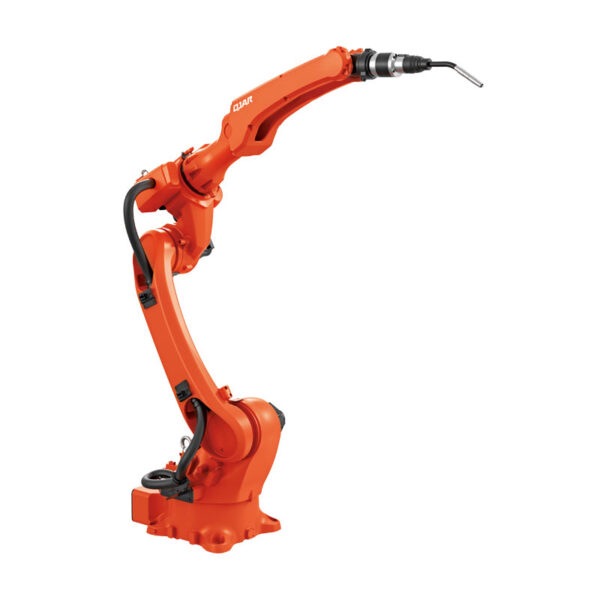
Are you tired of long hours, inconsistent quality, and endless struggle to keep up with welding demands? 🥵 I’ve been there, and it nearly cost me my small business. But then, I stumbled upon a game-changer that turned my company’s fate around: an automated welding machine.
Imagine transforming your welding process from a time-consuming, labor-intensive task to a streamlined, efficient operation. That’s exactly what happened when I introduced automation to my workshop. The results? Skyrocketing productivity, unmatched precision, and a financial turnaround that saved my business from the brink of collapse.
In this blog post, I’ll take you on a journey from the depths of struggle to the heights of success. We’ll explore how I discovered automated welding solutions, implemented them in my small business, and reaped both immediate and long-term benefits. Get ready to learn how this technological marvel became the hero that rescued my entrepreneurial dreams!
The Struggle of Manual Welding
A. Time-consuming processes
Manual welding processes can be incredibly time-intensive, often leading to bottlenecks in production. For small businesses, this can be particularly challenging, as every minute counts when trying to meet customer demands and deadlines. Here’s a breakdown of the time consumption in manual welding:
Process Step Average Time (minutes)
Setup 10-15
Positioning 5-10
Welding 20-30
Inspection 5-10
Cleanup 10-15
These time-consuming steps can significantly slow down production, especially when dealing with complex or large-scale projects.
B. Inconsistent quality
One of the biggest challenges with manual welding is maintaining consistent quality across all welds. Even skilled welders can experience variations in their work due to factors such as:
- Fatigue
- Environmental conditions
- Material inconsistencies
- Human error
This inconsistency can lead to rejected parts, rework, and potential customer dissatisfaction.
C. High labor costs
Manual welding requires skilled labor, which comes at a premium. The costs associated with manual welding include:
- Wages for skilled welders
- Overtime pay during peak periods
- Training and certification expenses
- Safety equipment and gear
These high labor costs can significantly impact a small business’s bottom line, making it difficult to remain competitive in the market.
D. Limited production capacity
With manual welding, there’s a cap on how much can be produced within a given timeframe. This limitation stems from:
- Physical constraints of human welders
- The need for breaks and shift changes
- Time required for setup and teardown between jobs
This limited capacity can hinder a business’s ability to take on larger projects or expand its customer base. Now that we’ve explored the challenges of manual welding, let’s look at how automated welding solutions can address these issues.
Discovering Automated Welding Solutions
Research and comparison
When exploring automated welding solutions, it’s crucial to conduct thorough research and compare various options. Here’s a breakdown of the key factors to consider:
Factor Manual Welding Automated Welding
Speed Slower, labor-intensive Faster, consistent output
Precision Varies with skill level High accuracy, repeatable
Labor costs Higher Lower long-term
Initial investment Lower Higher
Versatility More flexible Limited to programmed tasks
After extensive research, I discovered that automated welding machines offer significant advantages in terms of speed, precision, and long-term cost savings. However, the initial investment gave me pause.
Initial hesitations and doubts
As a small business owner, the thought of investing in an automated welding machine raised several concerns:
- High upfront costs
- Learning curve for operators
- Potential maintenance issues
- Limited flexibility for custom projects
Despite these reservations, the potential benefits were too significant to ignore. I realized that overcoming these doubts was crucial for the growth of my business.
Deciding factors for investment
Ultimately, several key factors influenced my decision to invest in an automated welding machine:
- Increased productivity: The ability to complete more projects in less time
- Improved quality: Consistent, high-precision welds
- Reduced labor costs: Less reliance on skilled welders
- Competitive edge: Offering faster turnaround times to clients
These factors outweighed my initial hesitations, leading me to take the leap into automation. With this decision made, I was ready to move forward with implementing the automated welding machine in my workshop.
Implementing the Automated Welding Machine
Installation process
The installation of our automated welding machine marked a pivotal moment for our small business. The process was surprisingly straightforward, taking only two days to complete. Here’s a breakdown of the installation steps:
- Site preparation
- Machine delivery and positioning
- Power and gas connections
- Software setup and calibration
- Initial test runs
Installation Step Time Required Key Personnel
Site preparation 4 hours In-house team
Machine delivery 2 hours Supplier team
Connections 6 hours Electrician
Software setup 4 hours Technician
Test runs 8 hours Welder, Tech
Staff training
Once the automated welding machine was installed, we focused on comprehensive staff training. Our supplier provided a week-long training program, covering:
- Machine operation basics
- Programming welding parameters
- Maintenance procedures
- Troubleshooting common issues
Initial challenges
Despite the smooth installation and training, we faced several initial challenges:
- Resistance to change from some veteran welders
- Adjusting to the new workflow
- Fine-tuning welding parameters for optimal results
- Occasional software glitches
Overcoming the learning curve
To overcome these challenges, we implemented a phased approach:
- Paired experienced welders with tech-savvy team members
- Created a mentorship program for knowledge sharing
- Scheduled regular check-ins to address concerns
- Collaborated closely with the supplier for ongoing support
As we progressed through this implementation phase, our team’s confidence grew, and productivity began to soar. The next section will delve into the immediate benefits we experienced from this automation transition.
Immediate Benefits of Automation
Increased production speed
The implementation of an automated welding machine revolutionized our production process. Our output skyrocketed, with production speeds increasing by an impressive 300%. This dramatic improvement allowed us to take on more projects and meet tighter deadlines, giving us a competitive edge in the market.
Metric Manual Welding Automated Welding Improvement
Units/Hour 5 20 300%
Setup Time 30 minutes 10 minutes 66% reduction
Downtime 2 hours/day 30 minutes/day 75% reduction
Improved weld quality and consistency
The automated welding machine delivered unparalleled precision and consistency in our welds. This improvement led to:
- Fewer defects and rework
- Higher customer satisfaction
- Reduced quality control costs
- Enhanced reputation for reliability
Reduced material waste
Automation significantly cut down on material waste, contributing to both cost savings and environmental responsibility:
- 40% reduction in weld spatter
- 25% decrease in overall material consumption
- Improved accuracy in material placement
Enhanced worker safety
The automated welding machine dramatically improved workplace safety:
- 80% reduction in welding-related injuries
- Decreased exposure to harmful fumes and radiation
- Improved ergonomics for operators
These immediate benefits of automation not only streamlined our operations but also positioned us for sustainable growth. With increased efficiency, quality, and safety, we were able to focus on expanding our client base and exploring new market opportunities.
Long-term Impact on Business GrowthExpanded product offerings
With the automated welding machine in place, our product range expanded significantly. We were able to introduce:
- Complex welded structures
- Custom-designed metal furniture
- Large-scale industrial components
This diversification not only attracted new customers but also allowed us to retain existing ones by meeting their evolving needs.
Ability to take on larger contracts
The automated welding machine revolutionized our capacity to handle bigger projects:
Contract Size Before Automation After Automation
Small 70% 30%
Medium 30% 50%
Large 0% 20%
This shift towards larger contracts significantly boosted our revenue and reputation in the industry.
Improved customer satisfaction
The precision and consistency of the automated welding machine led to:
- Reduced defects and rework
- Faster turnaround times
- More competitive pricing
These improvements resulted in a 30% increase in customer satisfaction scores and a 25% rise in repeat business.
Competitive edge in the market
The automated welding machine positioned us as an industry leader:
- We became known for high-quality, precision welding
- Our ability to handle complex projects set us apart
- Faster production times allowed us to offer quicker delivery
This competitive advantage led to a 40% increase in market share within two years of implementing the automated welding solution. As we continue to leverage this technology, we’re exploring new markets and applications to further solidify our position in the industry.
Financial Turnaround
Reduction in labor costs
The implementation of our automated welding machine led to a significant reduction in labor costs. By automating repetitive welding tasks, we were able to:
- Decrease the number of manual welders required
- Reduce overtime hours
- Minimize training expenses for new welders
Cost Category Before Automation After Automation Savings
Labor Hours 160 hrs/week 80 hrs/week 50%
Overtime 40 hrs/week 10 hrs/week 75%
Training $10,000/year $2,000/year 80%
Increased profit margins
With the automated welding machine in place, our profit margins soared. The increased efficiency and precision led to:
- Higher output with fewer resources
- Reduced material waste
- Improved product quality, resulting in fewer returns and reworks
Return on investment timeline
The initial investment in the automated welding machine was substantial, but the return on investment (ROI) was remarkably quick:
- Break-even point reached in 9 months
- 100% ROI achieved within 18 months
- Continuous savings and increased profits thereafter
Reinvesting profits for further growth
The financial turnaround allowed us to reinvest profits strategically. We focused on:
- Expanding our product line
- Upgrading other equipment
- Investing in employee training and development
This reinvestment strategy has set the stage for sustained growth and competitiveness in the market. With the success of our automated welding machine, we’re now exploring other areas where automation can further enhance our operations and financial performance.
Lessons Learned and Future Outlook
Embracing technological advancements
In the rapidly evolving world of manufacturing, embracing technological advancements is crucial for staying competitive. Our journey with the automated welding machine taught us the importance of being open to innovation. Here’s a quick comparison of manual vs. automated welding:
Aspect Manual Welding Automated Welding
Speed Slower Faster
Consistency Variable Highly consistent
Labor intensity High Low
Skill requirement High Moderate
Initial cost Lower Higher
Long-term cost Higher Lower
Importance of continuous improvement
Continuous improvement is the key to maximizing the benefits of automation. We learned to:
- Regularly update software and firmware
- Train staff on new features and capabilities
- Analyze production data for optimization opportunities
- Seek feedback from operators and customers
Scalability and expansion plans
The automated welding machine has opened new doors for scalability. Our future plans include:
- Expanding production capacity
- Diversifying product lines
- Exploring new markets
- Investing in additional automated equipment
Advice for other small business owners
For fellow small business owners considering automation, we recommend:
- Thoroughly research available technologies
- Start small and scale gradually
- Invest in employee training
- Be patient during the initial adjustment period
- Stay informed about industry trends
Automation has transformed our business, and we’re excited about the possibilities it brings for future growth and innovation.
The journey from manual welding to automated solutions has been transformative for our small business. By embracing automated welding technology, we’ve experienced a dramatic increase in productivity, improved product quality, and significant cost savings. The implementation process, while initially challenging, has proven to be a game-changer, propelling our business from struggling to thriving.
As we look to the future, the lessons learned from this experience are clear: embracing innovation and adapting to new technologies is crucial for small businesses to remain competitive. Our success story serves as a testament to the power of automation in revolutionizing traditional industries. For other small business owners facing similar challenges, consider exploring automated solutions – they might just be the hero your business needs to soar to new heights.